
Incident learning systems (ILS) have become essential tools for maintaining safety and quality in radiation oncology. As treatments grow more complex and workflows become increasingly multidisciplinary, clinics need structured ways to capture errors, near misses, and workflow inefficiencies — and to turn those observations into meaningful improvements.
While national systems such as RO-ILS provide valuable infrastructure for reporting and aggregation, many clinics still rely on in‑house incident learning systems to manage day‑to‑day safety operations. These internal systems vary widely: some are highly formalized committees, others are simple spreadsheets maintained by a single physicist. Each approach has strengths and limitations, and the best system is the one that fits the clinic’s culture, staffing, and workflow.
Why Incident Learning Matters
Radiation oncology is a field where small errors can have large consequences. An effective ILS helps clinics:
identify recurring workflow vulnerabilities
capture near misses before they become incidents
improve communication across disciplines
strengthen safety culture
document corrective actions and policy changes
build institutional memory
The goal is not simply to collect data — it is to learn from it.
Key Elements of an Effective Incident Learning System
Regardless of the model, successful ILS programs share several core features:
1. Blame‑Free Reporting Culture
A successful Incident Learning System thrives with reporting. Staff must feel safe reporting near misses and incidents. Focus on process, not people.
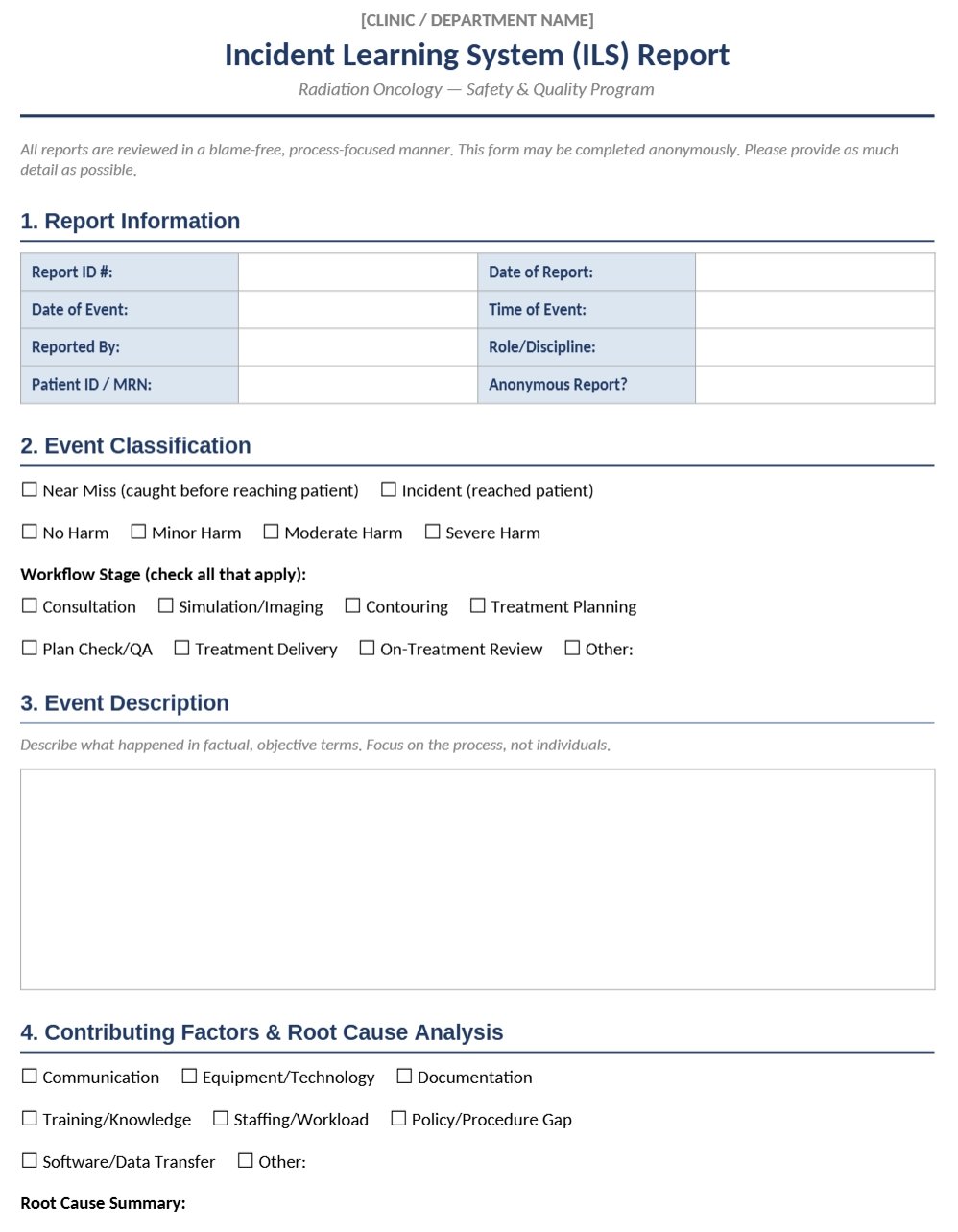
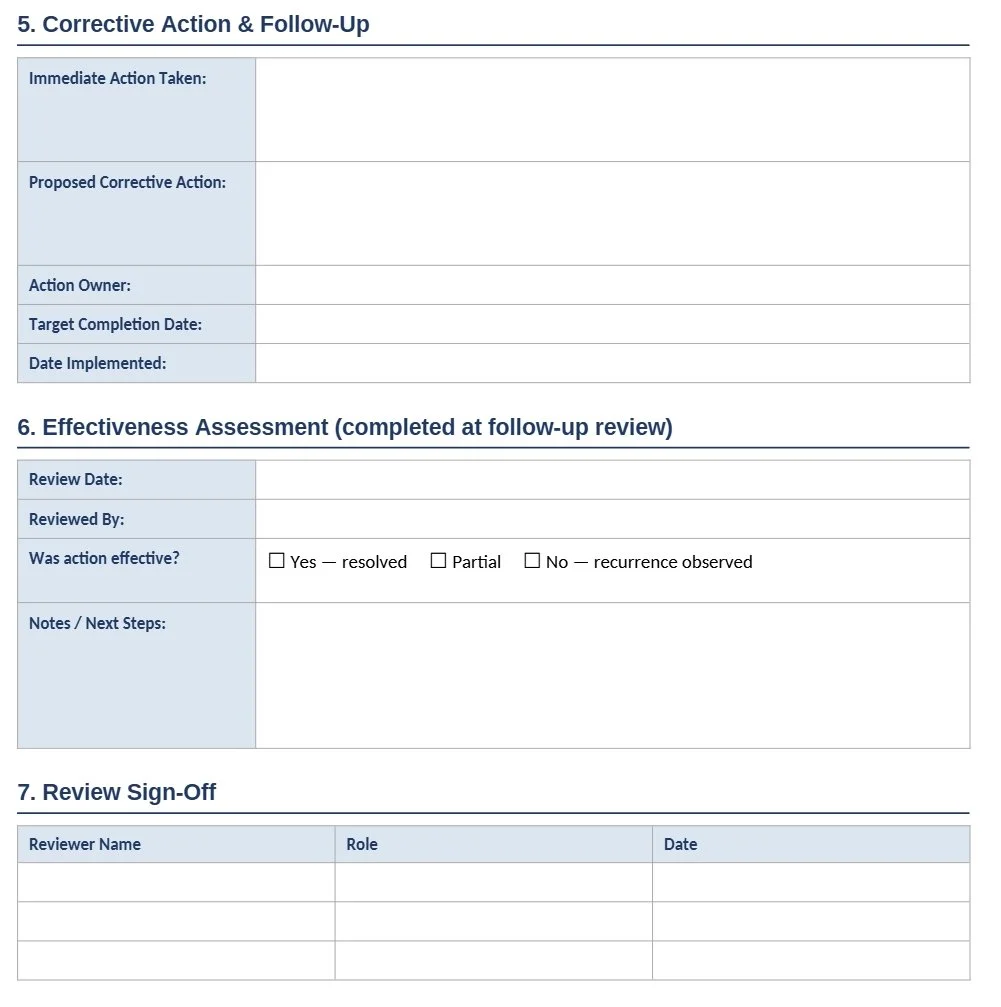
2. Clear Documentation Structure
Every incident should include:
description
workflow stage
root cause
corrective action
follow‑up
effectiveness assessment
3. Solution‑Oriented Thinking
An ILS should store solutions, not just incidents. This builds institutional memory.
4. Regular Review and Feedback
Monthly or quarterly reviews are set in place to ensure:
solutions are implemented
trends are identified
policies/procedures are updated
training needs are recognized
5. Accessibility
The system should be easy to use:
spreadsheets
shared drives
simple databases
cloud‑based forms
Example ILS Document
Complexity is not required for effectiveness. Incident learning can be as simple as an excel spreadsheet that a solo physicist can manage. Sometimes simpler allows for better accessibility and in-turn more
